
LG OE means the washer cannot drain properly. Begin with the external drain route and the exact model’s owner instructions. A clear filter, a humming sound, or a successful restart does not by itself establish that the complete drain system is working.
What the message is responding to
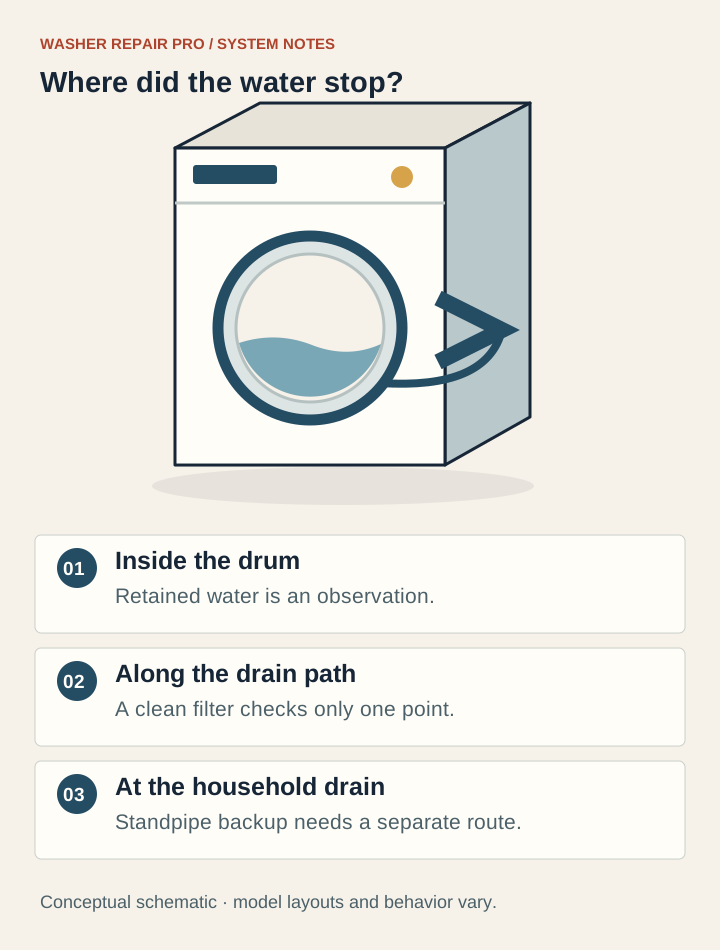
Used water must leave the tub through the washer’s drain system and reach the household drain. A restriction at different points can produce the same visible result: water remains when the cycle needs to continue. OE describes that result rather than identifying a replacement pump.
Separate the Cycle Stage From the Suspected Cause
Write down whether OE appears after washing, during a rinse, or at the final drain. Also note whether water is visibly standing in the drum. These observations are more useful than “it will not spin,” because a wet load and a full drum describe different starting points.
If it drains after cancellation but stops again on the next rinse, record that exact sequence. The iFixit question linked below describes this frustration; it does not establish a control-board diagnosis. An intermittent result needs the same care as a complete no-drain event.
| Observation | Useful next distinction |
|---|---|
| Water remains and OE repeats | Did any water leave through the normal drain? |
| Filter was cleaned already | Was the washer able to complete drainage afterward? |
| Standpipe backs up | Household drain capacity needs assessment. |
| Hum or buzz without drainage | Sound alone cannot confirm pump performance. |
Choose the Owner Check That Matches the Washer
Start with a visible external hose bend or compression, inspected without pulling out a stacked unit. LG’s current front-load guidance also includes a blocked household drain and freezing among the possibilities. Mention recent cold exposure or a drain backup when arranging help.
On a front-load model with an owner-accessible pump filter, read the matching manual first. Turn the washer off, disconnect power only from a dry and safely accessible position, let hot water cool, and prepare controlled drainage into a shallow container. Drain residual water through the manual’s designated hose before loosening the filter; opening a water-filled filter can flood the floor.
Top-load OE does not grant permission to use a front-load filter procedure. LG’s top-load article follows a different check path. If your manual provides no accessible filter, do not remove panels or tip the appliance to look for one.
What Previous Attempts Actually Tell You
Cleaning a dirty filter removes one possible restriction. It does not inspect the remaining hose route, verify the household drain, or measure pump output. Likewise, replacing a pump is part of the repair history, not proof that drainage is now correct.
LG discusses excess suds as another contributor in its front-load troubleshooting. Report visible foam, detergent type, and dose instead of adding more cleaner to a machine that still holds water. Use Tub Clean only as the applicable instructions allow after drainage has been restored.
If OE returns after the appropriate checks, stop repeating full wash cycles. Give the provider the model, first failing stage, water left behind, drain-backup observations, and every cleaning or replacement already attempted. Include whether the result changed temporarily or never changed at all.
Questions owners ask
Why does OE return between wash and rinse even though the washer sometimes drains?
Intermittent drainage is useful evidence, but it does not locate the fault. Record the failing stage and whether water actually leaves. A clean filter and occasional successful drainage still warrant inspection when OE keeps returning.
Does a humming drain pump mean the pump is good?
No. Record the sound alongside actual drainage. A hum alone does not demonstrate that water is moving through the complete system, so it should not be used to rule out a pump or justify buying one.
Where is the filter on an LG top-load washer with OE?
Do not assume it has the front-load service flap shown in online videos. Check the exact owner’s manual. Use only the access and maintenance procedure it provides; internal access belongs with service.
Will resetting an LG washer fix OE?
A restart can clear a display without removing the condition that caused it. Follow the model’s cancellation instructions and preserve a photo of OE. Recurrence after documented owner checks needs diagnosis.
Can I unscrew the filter while water is still in the washer?
Follow the model’s controlled-draining procedure first and allow hot water to cool. Have containers and towels ready. If you cannot safely control the water or identify the correct procedure, arrange help instead.
Keep the useful details for service
Record the full model, exact display, cycle stage, water location and checks already attempted. Create a repair brief to copy or download. If several symptoms overlap, use the Washer Repair Check without guessing a component.
Related next steps
Sources & model scope
Content reviewed November 5, 2026. Match the exact model and US owner’s manual. These references support the explanation; they are not evidence of an inspection of your machine.
Questions behind this guide
Owner discussions helped identify confusing follow-ups and prior attempts. They are individual experiences; manufacturer information supports the technical explanations above.